
Understanding Your Stride Rate During Your Runs
- Allison Felsenthal
- Nov 5, 2020
- 11 min read
Stride Rate
What is it?
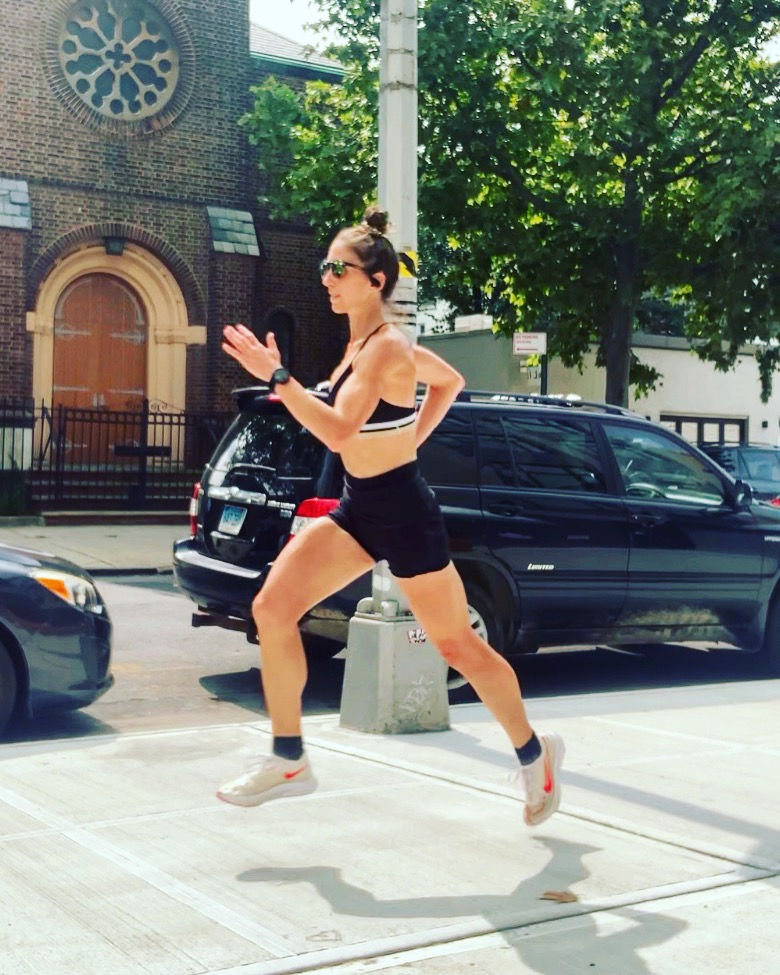
Stride Rate is also known as your running cadence and is simply measured as the infamous acronym you've seen flying around: SPM, or steps per minute.
What should my stride rate be for each training run?
Most importantly, before discussing SPM for different runs and speeds, it's important to make sure that regardless of number for your SPM, your hips are over your center of mass (or gravity) while you're running at your goal SPM! This way, you can eliminate overstriding aka getting plantar fasciitis and other potential hamstring injuries! Typically, recreational runners are told to run 150-180SPM and elite runners 180-200ish SPM. However, everyone is different. Therefore, everyone will have a different cadence that is the most optimal for THEM! Don't compare!
It's important to understand your own stride rate versus going off of arbitrary numbers. If the numbers that you're going for are not enabling you to eliminate overstriding, or the contrary while also jeopardizing your running form, you're setting yourself up for failure! You also could be putting WAY TOO MUCH WEIGHT ON YOUR HIPS/KNEES/ANKLE joints.
Your stride rate is going to be different from Jimmy's stride rate because stride rate is determined by accounting for your personal height/weight/where you're at fitness wise/stride length. It is going to be different for everyone, even if it's a slight difference. Compare yourself to YOURSELF ONLY! It's a win win that way.
What should I do if I need to adjust my stride rate? What if I don't know if I need to or not?
If you feel that your form is off, let's get you a gait analysis session setup!
If you KNOW it is off already, there are ways you can try to fix it without me! You can do this by manipulating your stride rate while making sure your feet are landing under your hips. To do this, you might need to increase your steps per minute. You can use a metronome to count how many steps per minute you're taking, OR you can manually do this by counting the steps you run in a minute by tracking each foot separately for example. This will allow you to get more accurate results by sticking to the SPM for one foot. Gives ya less to think about too! With your right foot, count the number of times it hits the ground in a minute.Then multiply that total number of steps by 2 to get the total steps taken by both feet in that given minute! Whatever speed you're at, you'll then know your steps per minute that you're running currently for that specific running speed. From there, you can then work on changing that up if needed!
How can I adjust my own running cadence?
To adjust your cadence to get it closer to that 180 spm mark for example (if that makes sense for you), you're going to need to have patience. DO NOT TRY TO DO THIS IN ONE DAY. It takes time! Slowly work on increasing your steps per minute by NO MORE than 5% between every 3 runs! Try doing these on your easy runs. It'll be easier to do this during them since you won't have to focus on hitting your workout paces, or focus on breathing, LITERALLY!
Can you explain why cadence should remain consistent, regardless of the speed that you're running?
Your steps per minute aka your cadence SHOULD ALWAYS BE THE SAME, REGARDLESS OF THE TYPE OF RUN THAT YOU'RE DOING AND THE SPEED OF THE RUN THAT YOU'RE DOING! As you increase your speed, naturally, with good running form, you will feel and find that you're tending lean more forward from your ankles and your stride length will naturally increase with the boost in acceleration and power that goes along with picking up your running speed.
For easier and slower runs, eliminating the forward lean from your ankles (like you do at faster paces) and also the increased stride length that comes with ramping up with the speed, your gait, or your feet will be under your hips with a less forward lean. The same number of times each foot strikes to the ground per minute while your running should remain constant, regardless of the speed.
___
Snippet from the article: "The biomechanics of running" from ScienceDirect that you might find interesting, as it relates to SPM (stride rate), but further elaborates on gait and the link between velocity and acceleration while increasing that running speed. Enjoy your new bedtime light reading! :)
Gait and Posture 7 (1998) 77 – 95Review PaperThe biomechanics of runningTom F. NovacheckMotion Analysis Laboratory,Gillette Children’s Specialty Healthcare,University of Minnesota,200E.Uni6ersity A6e.,St.Paul,MN55101,USAReceived 25 August 1997; accepted 22 September 1997AbstractThis review article summarizes the current literature regarding the analysis of running gait. It is compared to walking and sprinting. The current state of knowledge is presented as it fits in the context of the history of analysis of movement. The characteristics of the gait cycle and its relationship to potential and kinetic energy interactions are reviewed. The timing of electromyographic activity is provided. Kinematic and kinetic data (including center of pressure measurements, raw force plate data, joint moments, and joint powers) and the impact of changes in velocity on these findings is presented. The status of shoe wear literature, alterations in movement strategies, the role of biarticular muscles, and the springlike function of tendons are addressed.This type of information can provide insight into injury mechanisms and training strategies. © 1998 Elsevier Science B.V.Keywords:Running; Biomechanics; Kinematics; Kinetics; Electromyography; Energy; Injury1. Introduction:historyTo avoid the misconception that the analysis of running is a new area of interest, one need only examine the art of Grecian vases and consider the writ-ings of Aristotle, ‘Further, the forces of that which causes movement and of that which remains still must be made equal... For just as the pusher pushes, so the pusher is pushed — i.e. with similar force’ [1]. Leon-ardo da Vinci’s interest in accuracy in painting in the15th and 16th centuries increased focus on human movement and was followed by Newton’s proclama-tion of his three laws in the 17th century. In 1836, theWeber brothers (Wilhelm and Eduard) set the agenda for future research with the most detailed treatise on walking and running gait to date. They listed 150hypotheses including that the limb can act as a pen-dulum. More sophisticated tools were needed than are currently available to test them. Etienne JulesMarey (1830 – 1904) was a prolific pioneer of instru-mentation. He was among the first to employ photog-raphy and use it as a true photogrammetric tool. He Also designed and built the first serious force plat-form. The reader is referred to Cavanagh’s historical review [2] for further insight into the contributions and historical significance of the works of Braune,Fischer, Muybridge, Hill, Fenn, Elftman, and Hubbard.The explosion of interest in running has prompted a comparable explosion of research and assessment.This has been potentiated by technical advances in-cluding faster cameras and marker systems which eliminate the need to hand digitize frame after frame of video. The growth of this field has been spurred by the vast growth in participation in distance running in the late 1960’s and early 1970’s. Approximately 30million Americans run for recreation or competition.The rate of injury is significant. Each year between1:4 and 1:2 of runners will sustain an injury that is severe enough to cause a change in practice or perfor-mance [3,4]. This may lead the runner to seek consul-tation, alter training, or use medication.0966-6362:98:$19.00 © 1998 Elsevier Science B.V. All rights reserved.PIIS0966-6362(97)00038-6
[1][2][3,4]
T.F.No6acheck:Gait and Posture7 (1998) 77 – 9578Because running shoe companies now had a large new market, they spent part of their profits to support research. The increased incidence of injury highlighted the lack of understanding of the pathophysiology and biomechanics of chronic running injuries. These injuries are due to repetitive application of relatively small loads over many repetitive cycles (in sharp distinction to acute traumatic events such as ACL ruptures in football — a single large load). The tissues respond dif-ferently as well [5 – 7].It is often the number of repetitions that is problem-atic. A variety of intrinsic and extrinsic factors have been blamed for the development of these types of injuries [3,4,8]. In addition, particular patterns of injury have been noted. James and Jones [8] noted that almost75% of complaints fell into six categories (Fig. 1).Interestingly, one might intuitively think that particular anatomic abnormalities lead to specific injury patterns(e.g. hyperpronation predisposing to posterior tibial syndrome or genu varum leading to iliotibial band syndrome), but few such relationships have been found.Given the assumption that greater understanding will improve diagnosis and counseling, the quandary for the last two to three decades has been how to make more sense out of why and how injuries occur.The volume of literature is extensive; therefore, not all material can be reviewed or referenced. For the most part this treatment of the topic will be restricted to biomechanics and its application to the study of run-ning gait. Clinical information will be reviewed to the extent that it focuses one’s attention on the issues at hand. The reader is referred to articles and chapters dedicated to the pathophysiology and management of chronic running injuries [3 – 7,9 – 14]. Running Injuries[15] edited by Gary N. Guten, MD provides a relevant,recent review of clinical material. These clinical and pathophysiological issues lie outside the scope of this article. Several prior review articles [16 – 21] dedicated to the biomechanics of running gait are recommended.These have been invaluable to this author over the years and are highly recommended. The Biomechanics Of Distance Running edited by Cavanagh [22] is an essential reference.Unfortunately, a significant void exists between the world of the biomechanist and the realm of the clini-cian. A look at the available literature reveals that the link between the field of biomechanics and the clinical realm is difficult to identify. It seems that Dr StanJames (Eugene, OR, USA) has been the clinician who has exhibited the greatest understanding of the biome-chanics of running gait [23]. He has also used biome-chanical insight to shed light on running injury patterns[8,24] as have several biomechanists [25,26]. Even Though shoe manufacturers have lead the way in some areas of biomechanics research, one must wonder whether a broad spectrum of focus is maintained by that approach.2. Gait cycleHow does one go from a standstill to maximum forward velocity during sprinting? How does the move-ment strategy change between walking and running locomotion? The demarcation between walking and running (Fig. 1, point A) occurs when periods of dou-ble support during the stance phase of the gait cycle(both feet are simultaneously in contact with the ground) give way to two periods of double float at the beginning and the end of the swing phase of gait(neither foot is touching the ground). Generally as speed increases further, initial contact changes from being on the hindfoot to the forefoot (Fig. 1, point B).This typically marks the distinction between running and sprinting. In practicality, the difference between running and sprinting is in the goal to be achieved.Running is performed over longer distances, for en-durance, and with primarily aerobic metabolism. Jog-ging, road racing, and marathons are examples.Approximately 80% of distance runners are rearfoot strikers. Most of the remainder are characterized as midfoot strikers [27]. Sprinting activities are done over shorter distances and at faster speeds, with the goal of covering a relatively short distance in the shortest pe-riod of time possible without regard for maintaining aerobic metabolism. Elite sprinters perform with a fore-foot initial contact, and in fact, the hindfoot may never contact the ground. For sprinting, the body and its segments are moved as rapidly as possible throughout the entire race. For distance running on the other hand,the body is moved at a more controlled rate in relation to the energy demand of the race.The gait cycle is the basic unit of measurement in gait analysis [28]. The gait cycle begins when one foot comes in contact with the ground and ends when the same foot contacts the ground again. These moments in time are referred to as initial contact. Stance ends when the foot is no longer in contact with the ground. Toe off marks the beginning of the swing phase of the gait cycle. Each of these phases for both walking and run-ning is subdivided further as seen in Fig. 2. Because the stance phase in walking is longer than 50% of the gait cycle, there are two periods of double support whenFig. 1. Forward human locomotion. At point A, stance phase equals50% of gait cycle. Periods of double support in walking give way to periods of double float in running. Point B for the purposes of the kinematic and kinetic sections of this article represents a change from hindfoot to forefoot initial contact.
[5 – 7][3,4,8][8]Fig. 1[3 – 7,9 – 14][15][16 – 21][22][23][8,24][25,26]Fig. 1Fig. 1[27][28]Fig. 2
T.F.No6acheck:Gait and Posture7 (1998) 77 – 9579Fig. 2. The gait cycle. 2a. Walking figure. 2b. Walking gait cycle: *IC, initial contact; LR, loading response; *TO, toe off; MS, midstance; TS,terminal stance; PS, preswing; IS, initial swing; MS, midswing; TS, terminal swing. 2c. Running figure: 1. Stance phase absorption. 2. Stance phase generation. 3. Swing phase generation. 4. Swing phase reversal. 5. Swing phase absorption. *Musculoskeletal animation produced using SIMM(Software for Musculoskeletal Modelling, Musculographics, Chicago, Illinois). 2d. Running gait cycle: *for running and sprinting; IC, initial contact; TO, toe off; StR, stance phase reversal; SwR, swing phase reversal; absorption, from SwR through IC to StR; generation, from StRthrough TO to SwR.both feet are on the ground (Fig. 3), one at the begin-ning and one at the end of stance phase.In running, toe off occurs before 50% of the gait cycle is completed. There are no periods when both feet are in contact with the ground. Instead, both feet are airborne twice during the gait cycle, one at the begin-ning and one at the end of swing [30,31], referred to as double float. The timing of toe off depends on speed.Less time is spent in stance as the athlete moves faster.In our study, toe off occurred at 39 and 36% of the gait cycle for running and sprinting, respectively. Faster Runners and elite sprinters spend much less time instance than that (Fig. 3). World class sprinters toe off as early as 22% of the gait cycle [32].Regardless of speed, alternate periods of acceleration and deceleration occur during running referred to as absorption and generation (Fig. 2c,d). As can be seen,these phases do not coincide with the timing of initial contact and toe off. They are out of phase. During the period of absorption, the body’s center of mass falls from its peak height during double float. This period is divided by initial contact (IC) into swing phase absorp-tion (Fig. 2c,c5) and stance phase absorption (Fig. 2cc1). The velocity of the center of mass accelerates horizontally during this period as well. After stancephase reversal, the center of mass is propelled upward and forward during stance phase generation (Fig. 2cc2). Kinetic and potential energy increase. The limb is then propelled into swing phase after toe off (swing phase generation — Fig. 2cc3). At swing phase rever-sal (Fig. 2cc4), the next period of absorption begins.These issues will be discussed further in a subsequent section on the interaction of potential and kinetic energy.While stance will be plotted before swing for the purposes of this article, not all authors agree with this convention. Many publications depict swing phase first.In fact, DeVita [29] felt strongly that toe off should mark the beginning of the gait cycle and that swing phase be depicted before stance. His reasoning was based on the observation that both net joint torquesFig. 3. Variation in gait cycle parameters with speed of movement.For each condition, the bar graph begins at initial contact on the left and represents two complete gait cycles or strides. Note that as speed increases, time spent in swing (clear) increases, stance time (shaded)decreases, double float increases, and cycle time shortens. Informa-tion for this graph comes from data collected at the Motion AnalysisLab at Gillette Children’s Specialty Healthcare. *Data for elite sprint-ing is from Vaughan [16].
--
Allison Felsenthal
Founder
RUNWITHALLI LLC

Comments